
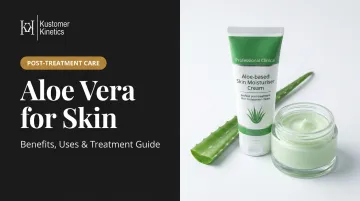
If you're dealing with dry or irritated skin, post-treatment recovery, or trying to decode ingredient labels to figure out which form of aloe actually delivers results, you're not alone. The gap between "aloe vera is good for skin" and understanding why, how, and which product is exactly what this guide covers.
We'll walk through the active compounds behind aloe's effectiveness, its clinically supported skin benefits, how to treat specific conditions, correct application techniques, and what separates a therapeutic-grade formulation from a bottle of green-tinted water.
Key Takeaways
- Aloe's inner leaf gel contains over 75 bioactive compounds; the full combination drives results, not any single ingredient
- Clinical evidence supports aloe for sunburn relief and acne (as an adjunct treatment)
- Daily application is safe for most skin types, including sensitive and acne-prone
- Professionally formulated aloe products deliver greater consistency and stability than generic gels for post-treatment skin recovery
- Product quality varies widely; check the ingredient order and avoid formulas with unnecessary irritant additives
What Makes Aloe Vera So Effective for Skin
The Composition Behind the Claims
Aloe vera (Aloe barbadensis Miller) is a succulent perennial—not a cactus, despite the common misconception. Its inner leaf gel is approximately 99% water, with the remaining solids responsible for aloe's active effects. Those solids include:
- Polysaccharides – particularly acemannan, which drives wound-healing and immunomodulatory activity
- Vitamins C and E – antioxidants that neutralize free radicals
- Enzymes – including bradykinase, which reduces inflammatory signaling
- Amino acids, minerals, and salicylic acid – supporting tissue repair and gentle exfoliation
- Phenolic compounds – contributing additional antioxidant and antimicrobial activity
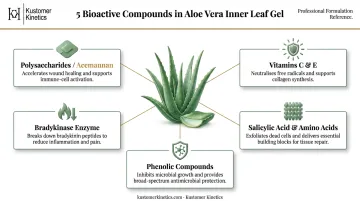
No single compound explains aloe's effectiveness. These components work across multiple biological pathways simultaneously—which is why the leaf structure matters as much as the chemistry.
Two Parts of the Leaf—Only One for Skin Care
Aloe leaves have two distinct zones. The outer green layer contains anthraquinones like aloin, which have antimicrobial properties but are also associated with irritation. The inner clear gel—the part used in topical skin care—provides moisturizing, anti-inflammatory, and healing effects without those irritant compounds.
Look for formulations derived from this inner gel (listed as Aloe barbadensis leaf gel or leaf juice on ingredient labels), not whole-leaf extracts that include anthraquinones.
What the Evidence Actually Says
The NCCIH confirms that topical aloe gel may speed burn healing, reduce burn pain, and support acne improvement when used alongside other treatments. Mechanistic research is solid—anti-inflammatory, antimicrobial, antioxidant, and wound-healing activity are well-documented in peer-reviewed literature. Clinical evidence strength varies by condition, though: aloe is well-supported for burns and sunburn, while evidence for eczema and psoriasis remains more limited.
Top Skin Benefits of Aloe Vera
Moisturizes Without Greasiness
Aloe gel's water-based composition absorbs quickly without leaving an occlusive or greasy residue, which makes it a practical choice for oily and combination skin types that typically avoid heavy moisturizers. It forms a light hydrating barrier that slows transepidermal water loss.
A study published in Skin Research and Technology found that cosmetic formulations containing freeze-dried aloe extract at 0.25% and 0.50% concentrations increased stratum corneum water content after a single application, with all aloe-containing formulations showing moisturizing effects after one to two weeks of use.
One caveat: a separate study found that multiple applications over four weeks produced a dehydrating effect in some subjects compared to placebo. Layering aloe under a sealing moisturizer, rather than using it as a standalone hydrator, produces more consistent results.
Soothes Inflammation and Irritation
Bradykinase, an enzyme in aloe gel, interferes directly with the inflammatory cascade. Acemannan, the major polysaccharide, stimulates keratinocyte growth factor and vascular endothelial growth factor—both involved in tissue repair and inflammation resolution.
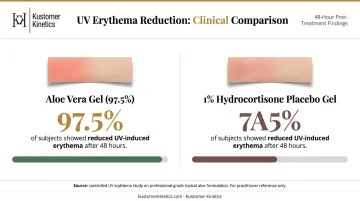
In a randomized, double-blind, placebo-controlled UV erythema study of 40 volunteers, 97.5% aloe vera gel significantly reduced UV-induced erythema after 48 hours, outperforming 1% hydrocortisone in placebo gel (though less effective than prescription-strength topical corticosteroids). This makes it a practical first-response for sunburn, redness, and post-procedure sensitivity, calming the skin without suppressing its healing response.
Supports Skin Repair and Tissue Remodeling
Aloe stimulates fibroblast proliferation and migration, which drives collagen and elastin production in the dermal layers. In vitro research confirms that aloe has a higher proliferative effect on fibroblasts than on endothelial cells, with gene expression changes relevant to tissue remodeling.
In animal wound models, topical aloe increased collagen content in granulation tissue and improved collagen crosslinking, key markers of effective wound repair. This mechanistic support is why aloe features consistently in post-treatment clinical recovery protocols.
Antioxidant Protection and Anti-Aging Support
Vitamins C and E in aloe act as free-radical scavengers. Oxidative stress from UV exposure and environmental aggressors is a documented driver of intrinsic and extrinsic skin aging, accelerating fine lines and loss of elasticity over time.
On the pigmentation side, aloesin—a compound unique to aloe—inhibits tyrosinase, the enzyme responsible for melanin production. Research published in 2002 found that aloesin treatment suppressed UV-induced pigmentation by 34%, making it a relevant ingredient in both anti-aging and brightening formulations.
Gentle Exfoliation and Pore Clarity
Aloe naturally contains salicylic acid, a beta-hydroxy acid that dissolves the bonds between dead skin cells and clears pore-clogging debris. Unlike high-concentration chemical exfoliants, aloe's salicylic acid content is low enough to exfoliate without disrupting the skin barrier, making it one of the few exfoliating-adjacent ingredients genuinely suitable for daily sensitive-skin use.
Treating Common Skin Conditions with Aloe Vera
Sunburn and Minor Burns
The American Academy of Dermatology recommends applying a moisturizer containing aloe vera to soothe sunburned skin. The cooling, anti-inflammatory, and hydrating combination addresses multiple aspects of sunburn discomfort simultaneously.
For minor burns, two randomized clinical trials comparing aloe to silver sulfadiazine found faster re-epithelialization in the aloe group—one study reported healing in 15.9 days vs. 18.73 days with statistical significance. These findings are solid—but limited to first- and second-degree burns in controlled settings. Severe burns, blistering over large areas, or burns accompanied by fever require emergency medical care—not home treatment.
Acne and Breakouts
Aloe addresses acne through two ways:
- Reduces redness and swelling of pustules and inflammatory lesions through anti-inflammatory action
- Clears pore congestion and prevents comedone formation via its salicylic acid content
The NCCIH notes topical aloe—used alongside other treatments—shows improvement in acne based on small clinical trials. A randomized, double-blind trial found aloe gel combined with tretinoin was significantly more effective than tretinoin alone for mild-to-moderate acne vulgaris.
For spot treatment, apply with a clean cotton swab directly to lesions up to three times daily.
Eczema, Psoriasis, and Chronic Skin Irritation
Aloe's moisturizing and anti-inflammatory properties can relieve the dryness, itching, and discomfort associated with eczema and psoriasis. An 8-week randomized study of 80 patients with mild-to-moderate plaque psoriasis found aloe vera cream reduced mean PASI scores from 11.6 to 3.9—comparable to results from triamcinolone acetonide.
That said, a 2013 systematic review noted methodological weaknesses across available RCTs that prevent strong conclusions. Aloe works best here as a complementary measure—supporting comfort and hydration alongside prescribed treatments, not replacing them.
Minor Wounds, Cuts, and Abrasions
For everyday minor skin injuries, aloe is a practical first-response option. Its antiseptic compounds inhibit bacterial and fungal colonization, while fibroblast-stimulating properties support faster tissue remodeling.
Know the limitations before applying:
- Not a substitute for medical-grade wound care in serious injuries or deep lacerations
- Avoid use on infected wounds—the protective barrier aloe forms can trap bacteria and worsen infection
- Superficial cuts, abrasions, and minor skin trauma are the appropriate use case
How to Use Aloe Vera on Skin
Choosing Your Form: Fresh, Bottled, or Formulated
| Form | Pros | Cons | Best For |
|---|---|---|---|
| Fresh leaf gel | Most potent, no additives | 24-hour shelf life, inconsistent concentration | Immediate use, minor burns |
| OTC bottled gel | Convenient, stable | Quality varies widely | Daily hydration, sunburn |
| Professional formulations | Consistent potency, targeted actives | Higher cost | Clinical recovery, therapeutic use |
For clinical and therapeutic applications, professionally formulated products offer consistency and stability that fresh gel and consumer bottles can't match. Kustomer Kinetics' Aloe-ADE™ Skin Moisturizer & Conditioner, for example, is built for post-treatment workflows—neutralizing treatment residue and conditioning skin after ultrasound, electrotherapy, hydrotherapy, and massage sessions.
Application Steps
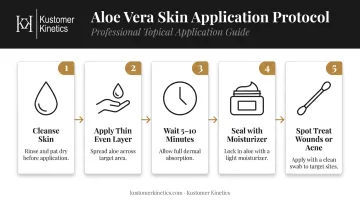
- Cleanse first – Apply aloe only to clean, dry skin
- Apply a thin, even layer – Less is more; a thick layer won't absorb faster
- Allow 5–10 minutes to absorb before layering other products
- Seal with a moisturizer for hydration purposes—aloe alone may not prevent TEWL long-term
- For spot treatments, use a clean swab to apply directly to acne lesions or minor wounds
Layering with Other Skincare Ingredients
Aloe pairs well with several common skincare actives:
- After glycolic acid – Apply glycolic first, allow full absorption, then apply aloe to calm post-exfoliation sensitivity
- With vitamin C serums – Aloe's anti-inflammatory properties complement vitamin C's brightening mechanism
- With hyaluronic acid – Both are water-based humectants; apply aloe first, then hyaluronic acid, then seal
- Caution with occlusive oils – If clogged pores are a concern, avoid layering aloe under heavy oils that can trap debris
Frequency Guidelines
| Goal | Recommended Frequency |
|---|---|
| Daily hydration / anti-aging | Once daily |
| Acne spot treatment | Up to 3x daily |
| Sunburn or post-procedure | As needed until resolved |
| Collagen / texture improvement | Daily; results appear over weeks, not days |
Choosing the Right Aloe Vera Formulation
What to Look For on the Label
- Aloe barbadensis leaf gel or leaf juice should appear in the top third of the ingredient list
- Ingredients listed near the bottom of a long ingredient deck are present in trace amounts—too little to provide meaningful benefit
- Some stabilizers and preservatives are necessary for shelf stability; what to avoid are high-concentration fragrances and sulfates that can irritate sensitive skin
- IASC (International Aloe Science Council) certification indicates the product met verified standards for aloe quantity, quality, and purity
Consumer-Grade vs. Professional-Grade
Consumer aloe products cover a wide range—from nearly pure gel with minimal additives to products where aloe is a marketing afterthought at 0.5% concentration. Professional-grade formulations, developed for clinical and therapeutic settings, are held to higher standards of consistency, stability, and targeted performance.
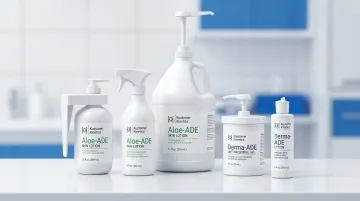
Kustomer Kinetics manufactures aloe-based post-treatment skin products—Aloe-ADE™ and Derma-ADE™—for conditioning intact skin after treatment in professional clinical settings across physical therapy, chiropractic, sports recovery, and massage therapy. These are post-treatment skin conditioners, not wound-care products. Both products are available in formats sized for clinical dispensing:
- 8 oz bottles for individual treatment rooms
- Gallon pump dispensers for high-volume practices
- 4-gallon case quantities for multi-location clinics
- Private-label options for clinic chains and healthcare brands
Side Effects and Safety Considerations
Topical aloe is generally well-tolerated. A patch-test study of 702 consecutive dermatology patients reported an absence of contact sensitization. Adverse reactions do occur in some individuals, however:
Possible reactions include:
- Allergic contact dermatitis (documented in case reports)
- Mild burning or stinging on application
- Redness or hives in sensitized individuals
People with known sensitivities to plants in the Liliaceae family (lilies, tulips) face a higher risk of allergic reaction. Always perform a patch test on the inner arm before widespread facial or body application.
Do not use aloe on:
- Infected wounds (may worsen infection by sealing in bacteria)
- Severe or deep burns (requires emergency medical care)
- Open blistering without medical guidance
One important distinction: the FDA's regulatory actions regarding aloe's safety concern oral laxative products—not topical gel. Topical and oral aloe carry completely different risk profiles.
Because the FDA does not regulate aloe vera topical products as drugs in most cases, quality and purity vary widely across the market. If you develop a rash, hives, or a worsening skin condition, discontinue use and consult a dermatologist.
Frequently Asked Questions
Can I use aloe vera after glycolic acid?
Yes. Apply glycolic acid first and allow it to fully absorb before applying aloe gel. Aloe's anti-inflammatory and hydrating properties make it an ideal follow-up to AHA exfoliation, calming any post-exfoliation sensitivity and restoring moisture balance.
Is aloe vera gel good for crepey skin?
Aloe can improve crepey skin over time by stimulating fibroblast activity, which supports collagen and elastin synthesis while hydrating the surface. Results are gradual — expect texture and firmness improvements over several weeks of consistent daily use.
How often should you apply aloe vera to your skin?
Once daily works well for general hydration and anti-aging purposes. For acne spot treatment, apply up to three times daily. For sunburn or post-procedure irritation, apply as needed until symptoms resolve.
Can aloe vera be used on sensitive or acne-prone skin daily?
For most people, yes. Aloe is non-comedogenic and anti-inflammatory, making it a well-tolerated daily option for sensitive and acne-prone skin. Do a patch test first and choose fragrance-free, minimal-additive formulations to reduce irritation risk.
What's the difference between fresh aloe vera gel and store-bought products?
Fresh gel from the plant is the most potent and additive-free form, but it degrades within 24 hours without refrigeration. Store-bought gels include preservatives for shelf stability; check that aloe is listed as the primary ingredient to confirm meaningful concentration.
Can you leave aloe vera gel on your face overnight?
Yes, overnight application is safe for most people and can enhance aloe's moisturizing and healing effects with extended skin contact. Stick to pure gel without added actives for overnight use, and do a patch test first if you have reactive skin.