Introduction
More practitioners are building branded product lines than ever before. Massage therapists, physical therapists, estheticians, and chiropractors increasingly recognize that recommending a generic retail product at checkout is a missed opportunity — both financially and professionally.
A branded topical bearing your clinic's name extends your therapeutic relationship beyond the treatment room — something a drugstore product simply can't do.
This guide is for licensed professionals and clinic owners who want to understand how private label topicals work, what separates a quality manufacturer from a mediocre one, and how to launch a product line without overcomplicating things. Whether you're running a solo massage practice or managing a multi-location PT clinic, the principles here apply.
Key Takeaways:
- Private label topicals let practitioners sell professional-grade products under their own brand without owning a manufacturing facility
- Retail product sales can represent 5%–30% of spa and clinic revenue (ASCP)
- Product types span pain relief, skincare, ultrasound couplants, and conductive gels — each suited to different practice types
- FDA compliance requirements differ for cosmetic-claim vs. drug-claim topicals
- Starting with one or two hero products reduces inventory risk and cuts time-to-shelf
What Are Private Label Topicals?
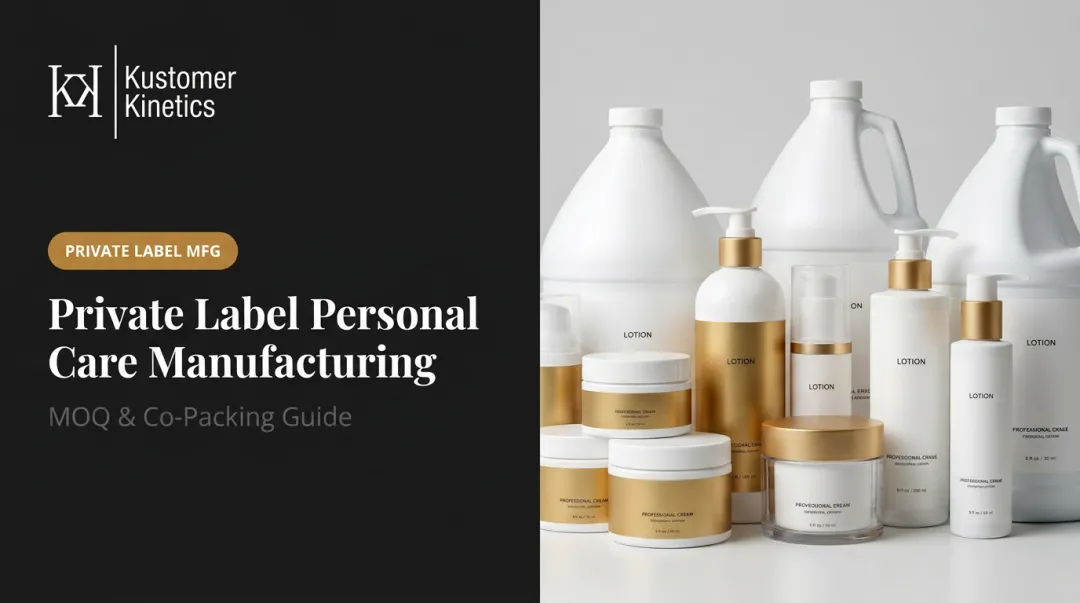
Private label topicals are professionally manufactured creams, gels, lotions, waxes, and hydrogels produced by a third-party manufacturer and sold under a practitioner's or business's own brand name. The formulations exist; your name goes on the label.
This differs from two related models worth understanding:
| Model | What It Means |
|---|---|
| White label | Ready-made formula with client branding, minimal changes |
| Private label | Base formula with customization options (fragrance, texture, actives) |
| Custom formulation | New formula developed from scratch with a chemist |
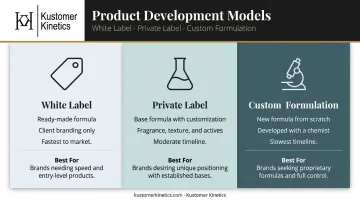
Most practitioners starting out use private label — it balances speed to market with product differentiation.
How Professional Topicals Differ from Retail OTC Products
Professional-grade private label topicals aren't simply repackaged drugstore products. They're formulated for clinical or therapeutic settings, often at higher active-ingredient concentrations and with specific performance characteristics suited to professional application workflows.
That distinction matters in practice. A pain relief lotion for a physical therapy clinic needs a different profile than a consumer product built for casual home use — the active ingredient levels, texture, and compatibility with modalities like ultrasound or electrode therapy all affect clinical performance.
Applications Across Professional Disciplines
Private label topicals serve a wide range of clinical disciplines:
- Analgesic lotions and cooling gels for pain relief and muscle recovery in chiropractic and PT settings
- Diagnostic and therapeutic couplant gels for ultrasound imaging and treatment
- Conductive creams and gels for EMG, TENS, NMES, and biofeedback applications
- Moisturizers, cleansers, and conditioning lotions for post-treatment care in esthetics and spa
- Professional waxes and glide lotions for deep tissue massage therapy
Why Practitioners and Clinics Launch Their Own Private Label Topical Lines
Revenue Diversification
Every time a client leaves your office and buys pain relief cream at a pharmacy, that revenue bypasses you entirely. Branded point-of-care sales change that equation.
According to ASCP, retail sales can average 5%–30% of spa revenue. ISPA's 2024 retail survey found that 48% of spa respondents derived 10% or more of total revenue from retail sales — without adding staff or expanding physical space.
For a physical therapy clinic, WebPT identifies retail product sales as a cash-based revenue stream that complements insurance-reimbursed services. Patient-recovery products — including topical analgesics — rank among the most practical retail additions.
Brand Differentiation and Credibility
A product bearing your clinic's name communicates expertise. When a client uses your branded lotion at home and it works, they associate that outcome with your practice. Generic products don't create that connection.
In competitive markets where multiple practitioners offer similar services, a cohesive professional brand — including labeled products — signals depth of commitment to client outcomes.
Client Retention Beyond the Treatment Room
Branded topicals extend the therapeutic relationship between appointments. A client applying your pain relief cream at home is reminded of your practice daily — and when they run out, they return to you for a refill.
This is especially relevant for:
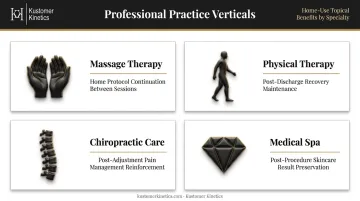
- Massage therapy — clients continue treatment protocols at home between weekly sessions
- Physical therapy — patients maintain recovery routines post-discharge
- Chiropractic care — post-adjustment application products reinforce at-home pain management
- Medical spas — post-treatment skincare products preserve procedure results
Formulation Fit for Your Patient Population
Private label lets you select formulations matched to your specific clientele rather than stocking whatever's available from a general distributor. Each practice type has different needs:
- Sports recovery clinics — high-intensity analgesic gels with cooling action for acute soreness
- Geriatric rehab centers — gentle, non-irritating formulations for sensitive or fragile skin
- Medical spas — post-procedure moisturizers and skin conditioners that reinforce treatment results
- Chiropractic practices — deep-penetrating topicals for post-adjustment pain management
Matching formulation to patient population makes your product recommendation clinically defensible — not just a branded add-on.
Types of Private Label Topicals and Their Professional Applications
Therapeutic and Pain Relief Topicals
These are among the most commercially practical private label products for practitioners in massage therapy, chiropractic, physical therapy, and sports recovery.
ACP and AAFP guidelines recommend topical NSAIDs and menthol-containing gels as first-line therapy for acute non-low-back musculoskeletal injuries — the same injuries these practitioners treat daily.
Common therapeutic topical types and their clinical roles:
- Analgesic lotions — formulated with methyl salicylate and menthol for post-treatment pain relief and between-visit home use
- Cooling analgesic gels — fast-onset cooling relief for acute injury management, athletic training, and post-adjustment application
- Topical anesthetic hydrogels — lidocaine-based products for pain management, chiropractic, and rehabilitation settings
- Transdermal hydrogel kits — multi-component fast-onset pain relief kits containing lotions and gels, hydrogel pads, hydrogel tape, and bottles/roll-ons, designed for clinical dispensing
Kustomer Kinetics' Pain Blocker, for example, contains 15% methyl salicylate and 10% menthol in a non-greasy formula compatible with NSAIDs — a clinically relevant spec for practitioners managing musculoskeletal conditions. Applied pre- and post-treatment, these products extend session outcomes and fit naturally into an existing clinical workflow.
Skincare and Cosmetic Topicals
Estheticians and skincare professionals use topicals throughout every service. Private labeling these products adds professional credibility and differentiates clinic-dispensed products from what clients could buy at a department store.
Professional skincare applications include:
- Pre-treatment cleansers — astringent skin cleansers that remove impurities and prep skin before treatments
- Post-treatment moisturizers and conditioners — skin-conditioning lotions applied after ultrasound, electrode therapy, massage, or hydrotherapy to neutralize treatment residue
- Professional massage glide lotions — formulated for smooth application during massage, with skin conditioning properties
Ultrasound Couplants and Clinical Gels
This category spans physical therapy clinics, chiropractic offices, imaging centers, and hospitals. Private labeling couplant gels — products often treated as purely functional — gives clinics a branded experience that extends to their clinical supplies.
Two distinct product types exist:
- Diagnostic couplant gels — used in imaging applications across hospitals, OB/GYN, cardiology, and diagnostic ultrasound. Kustomer Kinetics' Sonic Scan is formulated for transducer-to-skin transmission in diagnostic workflows.
- Therapeutic couplant gels — used specifically in physical therapy and chiropractic treatment modalities. Ultra Gel is built for therapeutic ultrasound coupling in PT and rehab clinics.
- Conductive electrode creams — used for EMG, ECG, TENS, NMES, and biofeedback applications across neurology, cardiology, sports medicine, and rehabilitation settings.
Key Ingredients in Professional-Grade Private Label Topicals
Active Ingredient Categories
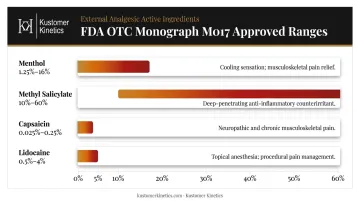
The FDA OTC Monograph M017 establishes the approved concentration ranges for external analgesics:
| Ingredient | Approved OTC Range | Common Use |
|---|---|---|
| Menthol | 1.25%–16% (counterirritant) | Cooling sensation, pain relief |
| Methyl salicylate | 10%–60% | Deep-penetrating pain relief |
| Capsaicin | 0.025%–0.25% | Localized pain management |
| Lidocaine | 0.5%–4% | Topical anesthesia |
Concentration matters. Professional-grade formulations are optimized for therapeutic strength appropriate to clinical settings — not just consumer comfort. A manufacturer with clinical formulation experience will position actives at the higher end of approved ranges where appropriate, rather than defaulting to the lowest effective dose.
Cosmetic Claims vs. Drug Claims
This distinction has regulatory weight. Per FDA guidance, the FDA determines a product's category by its intended use. A massage lotion that claims only to moisturize is a cosmetic. The same product claiming to relieve muscle pain becomes a drug — and drug-claim products must comply with OTC monograph rules and carry a Drug Facts label.
Practitioners should confirm with their manufacturer whether each product in their line is formulated as a cosmetic or drug-claim product, because labeling requirements differ between the two — including required format, active ingredient disclosure, and directions for use.
How to Choose a Private Label Topicals Manufacturer
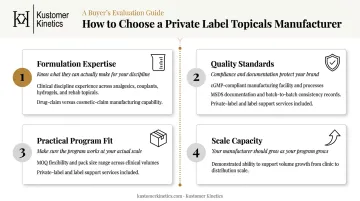
Formulation Expertise in Your Specific Discipline
Not all contract manufacturers understand clinical topicals. A company experienced in consumer skincare products isn't automatically equipped to formulate a therapeutic ultrasound couplant or a lidocaine-based anesthetic hydrogel that performs correctly in a clinical setting.
Evaluate manufacturers on:
- Experience serving your specific professional category (massage therapy, PT, skincare, chiropractic)
- Whether they manufacture drug-claim OTC products or only cosmetics
- Familiarity with professional pack sizes and clinical dispensing formats
Quality Standards That Matter
For practitioners considering OTC drug-claim products, manufacturing under 21 CFR Part 211 (Current Good Manufacturing Practice) is the baseline regulatory requirement. For cosmetic-claim products, FDA is developing regulations under MoCRA while ISO 22716 serves as the applicable quality standard.
What to verify:
- Confirms cGMP-aligned manufacturing practices
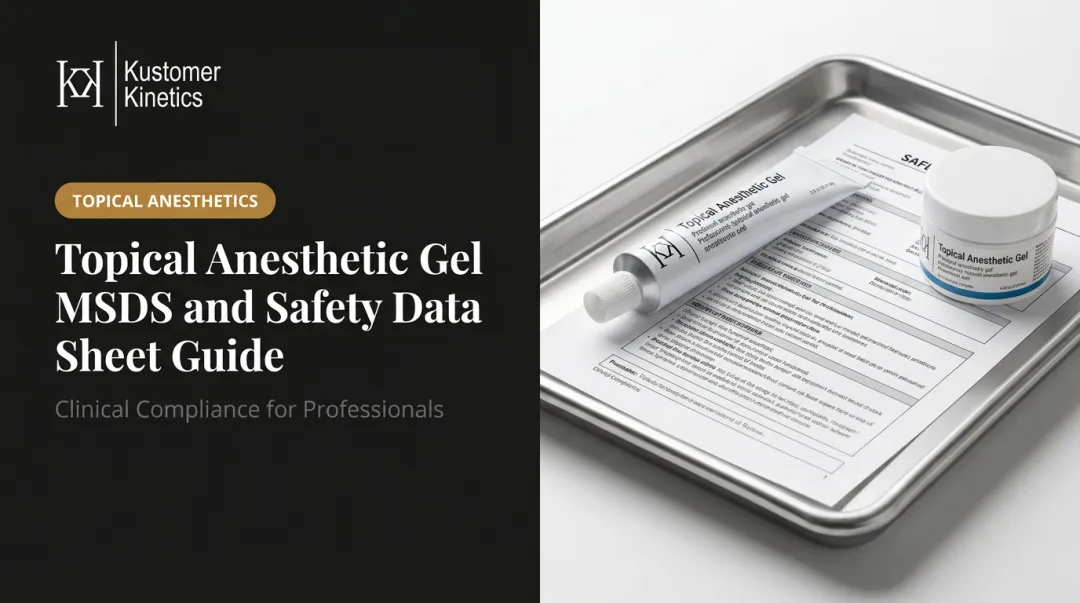
- Provides full MSDS documentation for all formulations
- Discloses active ingredient concentrations
- Guarantees batch-to-batch formulation consistency
Practical Program Considerations
A technically excellent manufacturer that can't accommodate small clinic orders or scale with your business creates supply chain and growth bottlenecks. Assess:
- Minimum order quantities that work for a single-location clinic
- Pack sizes covering clinic-dispensing bottles, gallon jugs, and case quantities
- Label support to help produce compliant labels (or flexibility to manage them independently)
- Capacity to support higher volumes as your product line grows
Kustomer Kinetics as a Private Label Partner
Kustomer Kinetics manufactures professional clinical and wellness topicals in Arcadia, California, with a private label program built specifically for this market. The full product range includes:
- Pain relief lotions and cooling gels
- Topical anesthetic hydrogels
- Therapeutic and diagnostic ultrasound couplants
- Conductive electrode creams
- Deep tissue massage waxes, glide lotions, and post-treatment skincare products
The program delivers turnkey formulation, fill, labeling, packaging, and bulk supply under your brand. Clients include massage spa chains, clinic chains, PT practices, chiropractic offices, sports recovery brands, and rehab equipment OEMs. All products are manufactured under cGMP-aligned practices with full MSDS documentation included.
For program details, minimum order schedules, and custom quotes, contact Kustomer Kinetics at 626-445-6161 or visit kustomerkinetics.com.
Best Practices for Launching Your Private Label Topical Line
Start with One or Two Hero Products
Launching a six-product line before you understand client demand is how practitioners end up with shelves of slow-moving inventory. Start with the one or two products that directly address the most common client need in your practice:
- Massage therapists → pain relief lotion or post-treatment moisturizer
- PT clinics → analgesic gel or therapeutic ultrasound couplant
- Estheticians → post-treatment skin conditioner or pre-treatment cleanser
- Chiropractic offices → cooling gel or analgesic lotion
Test client response. Refine. Then expand.
Get Labeling Right Before Printing Anything
OTC drug-claim topicals require a Drug Facts panel with specific elements under 21 CFR 201.66:
- Active ingredients with quantities
- Purpose, uses, and warnings
- Directions and other information
- Inactive ingredients
Labels must also identify the manufacturer, packer, or distributor by name and place of business — and if you didn't manufacture it, the label must say "Distributed by" or "Marketed by" with your information. Net quantity is required on the principal display panel.
Confirm label compliance with your manufacturer before printing. Reprinting labels is expensive; non-compliant labels are worse.
Integrate the Product Into Your Client Experience
Clients buy products they've already experienced. Use your branded topical during sessions, explain what it contains and why you chose it, and let the product speak for itself. When clients ask where to get more, the answer is you — not a pharmacy.
This approach drives organic sales without requiring a hard sell.
Frequently Asked Questions
What are private label topicals?
Private label topicals are professionally manufactured creams, gels, and lotions produced by a third-party manufacturer and sold under a practitioner's or business's own brand name. They allow clinics and wellness professionals to offer branded products without operating a manufacturing facility.
What are some examples of topical drugs?
Common examples include analgesic creams with menthol or methyl salicylate, cooling gels with higher menthol concentrations, lidocaine-based topical anesthetics, and anti-inflammatory preparations. Whether a product is classified as a drug or cosmetic depends on its intended claim; products making pain relief claims fall under FDA OTC drug regulation.
What companies use private label topicals?
Massage therapy studios, physical therapy clinics, chiropractic offices, medical spas, sports recovery centers, and skincare practices are among the most common users. They use private label products to offer branded therapeutic and wellness products directly to clients at the point of care.
How do I start a private label topical product line?
Identify the formulation types most relevant to your practice, find a manufacturer with experience in your professional category, confirm formulation and labeling compliance, and place a small initial order to test client response before scaling volume.
Are private label topicals FDA regulated?
Yes. OTC topical products with drug claims must comply with FDA OTC monograph rules, including concentration limits for active ingredients and Drug Facts labeling requirements. Cosmetic-claim products fall under separate FDA cosmetic regulations. Because finished private label products aren't individually FDA-approved, choosing a manufacturer that follows current GMP standards is essential.
What ingredients are commonly used in private label topicals?
Frequently used active ingredients include menthol, methyl salicylate, capsaicin, and lidocaine for analgesic products. Skincare and post-treatment products typically use moisturizing agents and botanical extracts. Appropriate concentrations vary by clinical application and product type.