Introduction
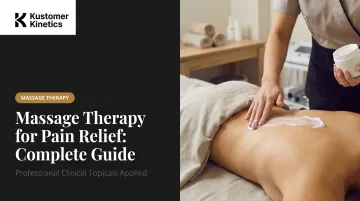
Pain is the leading reason Americans seek medical care, and more practitioners and patients are turning to massage therapy as a clinically supported treatment option—not a luxury add-on. Whether managing chronic back pain, recovering from a sports injury, or dealing with tension headaches, massage offers a non-invasive path to relief that works alongside conventional medicine.
Massage therapy is the systematic manipulation of soft tissues (muscles, tendons, fascia, and connective tissue) to reduce pain, restore mobility, and accelerate recovery. What was once considered a spa indulgence now has a substantial body of peer-reviewed research behind it.
This guide covers the science behind pain relief, which techniques work for specific conditions, what the research says about clinical outcomes, and what to expect from a professional session.
Key Takeaways
- A 2016 meta-analysis found massage reduced pain intensity significantly compared to no treatment (SMD -1.14)
- Technique selection matters—deep tissue, Swedish, trigger point, and myofascial release each target different pain sources
- Massage shows the strongest evidence for back pain, neck pain, tension headaches, and fibromyalgia
- Mental health benefits—reduced anxiety and improved mood—accompany the physical relief
- Massage works best alongside physical therapy, chiropractic care, and professional-grade topical products
How Massage Therapy Relieves Pain: The Science Behind It
Massage works through several overlapping mechanisms—none of them magic, but all of them measurable.
Sensory Modulation and the Pain Gate
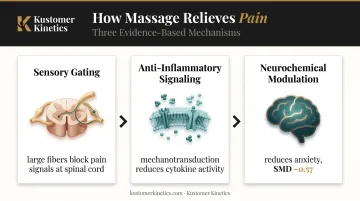
The most widely cited explanation is gate control theory: massage stimulates large sensory nerve fibers that compete with pain signals traveling to the brain, effectively dampening pain perception at the spinal cord level. This remains a plausible and clinically useful model, though it hasn't been directly confirmed in massage-specific trials. It's the same mechanism behind rubbing a bumped knee: incoming sensory signals crowd out the pain.
Local Anti-Inflammatory Signaling
A key study published in Science Translational Medicine (Crane et al., 2012) biopsied muscle tissue before and after massage in exercising subjects. The findings showed massage activated mechanotransduction pathways that attenuated inflammatory cytokine signaling at the cellular level. This supports a local anti-inflammatory effect—particularly relevant for post-exercise soreness and acute musculoskeletal injury.
Worth noting: while improved circulation is often cited, a 2023 systematic review found no consistent evidence that massage increases muscle blood flow or clears blood lactate. The oxygenation and "detox" framing isn't well-supported.
Anxiety Reduction and Neurochemical Effects
Research published in Pain Medicine found massage reduced anxiety compared to active comparators (SMD -0.57), suggesting a measurable psychological effect alongside physical relief. Whether endorphin release, reduced cortisol, or the therapeutic context drives this effect isn't fully settled. The outcome, however, holds across multiple studies.
Taken together, these three mechanisms — sensory gating, local anti-inflammatory signaling, and neurochemical modulation — explain why massage often succeeds where single-target treatments don't.
Types of Massage Therapy for Pain Relief
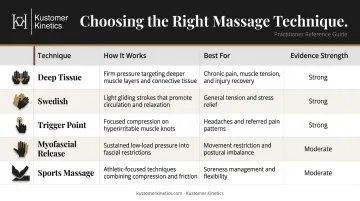
Massage is not one-size-fits-all. The right technique depends on your pain type, location, sensitivity, and goals. Here's how the main approaches differ:
Deep Tissue Massage
Uses slow, firm pressure targeting deeper muscle layers and connective tissue. A clinical trial comparing deep tissue to standard therapeutic massage in chronic low back pain patients found significantly better outcomes for both pain (p=0.015) and disability (p=0.038) after ten sessions. Best suited for:
- Chronic muscle pain
- Persistent tightness
- Post-injury recovery
- Sciatica (though direct trial evidence for true radicular sciatica is limited)
Expect temporary soreness for 24–48 hours post-session—that's normal and not a sign of harm.
Swedish Massage
Long, gliding strokes at light-to-moderate pressure, prioritizing relaxation and circulation. An 8-week RCT in rheumatoid arthritis patients found Swedish massage reduced pain and analgesic use compared to routine care (p=0.01). It's the go-to choice for:
- General muscle tension
- Mild to moderate pain
- Patients new to massage or with lower pressure tolerance
Trigger Point Therapy
Trigger points are hyperirritable spots in muscle that refer pain to other areas (a knot in your shoulder, for instance, can cause a headache). Focused compression on these points can release the knot and resolve both local and referred pain. A 56-person placebo-controlled trial found trigger point-focused massage significantly reduced tension headache frequency over time (p=0.0003).
Myofascial Release
Rather than targeting specific knots, myofascial release applies broad, sustained pressure across the fascia, the connective tissue that encases muscles. A 2024 systematic review found improved joint range of motion in athletes following myofascial release protocols. It's particularly useful when restricted movement compounds pain.
Best suited for:
- Movement restriction linked to pain
- Post-surgical or post-injury stiffness
- Athletes with recurring tightness across multiple muscle groups
Sports Massage and Other Techniques
- Sports massage: Targets muscles stressed by athletic loading, improving flexibility and reducing post-exercise soreness. Recovery benefits are reasonably well supported; evidence for performance enhancement is less consistent.
- Shiatsu: Finger pressure along traditional meridian points. Current evidence is insufficient in both quantity and quality.
- Manual lymphatic drainage: Best supported for lymphedema management post-surgery or cancer treatment, not general musculoskeletal pain.
- Craniosacral therapy: A 2019 meta-analysis reported some pain reduction versus sham, but a broader 2024 review found no clinically relevant benefit for musculoskeletal disorders. Treat claims cautiously.
Professional massage therapists rely on purpose-built topical products (waxes, glide lotions, creams, and gels) to facilitate technique and support patient comfort throughout the session. Kustomer Kinetics, based in Arcadia, California, manufactures professional-grade massage topicals including deep tissue massage wax (Soft Touch) and glide lotions (Ultra-Shine) used in massage therapy and clinical recovery settings.
Pain Conditions That Respond Well to Massage Therapy
Back Pain
Low back pain has more massage research behind it than almost any other condition. The 2015 Cochrane review pooled 25 trials and 3,096 participants, finding short-term improvements of approximately 9 points on a 100-point pain scale and 1.76 points on a 24-point function scale—though the evidence was rated low to very low quality. Short-term relief with minimal risk makes massage a practical component of a back pain management plan.
Neck and Shoulder Pain
Multiple sessions of 60-minute therapeutic massage have outperformed self-care alone for chronic neck pain. A dosing trial found 60-minute sessions 2–3 times weekly for 4 weeks most effective—notably better than shorter or less frequent sessions. Trigger point therapy and soft tissue techniques are especially useful for cervical muscle tension and myofascial restrictions.
Headaches and Migraines
Tension-type and cervicogenic headaches often originate from trigger points in the neck, upper back, and shoulders. In one study, headache frequency dropped from 6.8 to 2.0 episodes per week during twice-weekly massage—though the study was small. The larger Moraska placebo-controlled trial confirmed massage's superiority over light-touch placebo for pressure-pain thresholds. For both headache types, trigger point-focused massage has the strongest evidence base.
Fibromyalgia and Chronic Pain
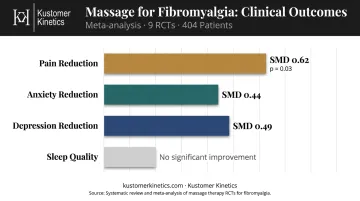
Fibromyalgia presents a clinical complication: widespread sensitivity means that even moderate pressure can be uncomfortable for many patients. A meta-analysis in PLoS One pooling 9 RCTs and 404 patients found that massage lasting at least 5 weeks improved pain (SMD 0.62, p=0.03), anxiety (SMD 0.44), and depression (SMD 0.49)—though sleep quality did not improve significantly. Most practitioners favor lighter techniques — Swedish massage and myofascial release — to manage patient tolerance while still achieving therapeutic outcomes.
Physical and Mental Benefits of Massage Therapy
The case for massage extends beyond pain scores.
Physical benefits beyond pain reduction:
- Improved joint flexibility and range of motion (supported by arthritis and myofascial release studies)
- Reduced muscle stiffness
- Faster post-workout recovery
- Stronger immune response—relevant for patients in active rehabilitation
Mental and emotional benefits:
- Reduced anxiety (consistent across multiple studies)
- Improved mood and sense of well-being
- Improved depression scores in fibromyalgia patients across several clinical trials
Cortisol reduction is often cited as a primary mechanism, but a 2011 meta-analysis found massage's cortisol effect was too small to explain the clinical benefits observed. The anxiety reduction is real; the hormonal explanation for it is less certain.
This points to massage's alignment with the biopsychosocial model of pain, which holds that pain is never purely physical. Chronic pain patients frequently experience anxiety and depression that amplify pain perception. Treating both simultaneously, as massage does, addresses a dimension of pain that medication alone often cannot reach.
What to Expect During a Massage Therapy Session
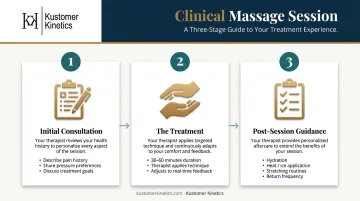
Most clinical massage sessions follow a consistent structure:
- Initial consultation: The therapist reviews your pain history, areas of concern, and pressure preferences. Be specific—this isn't a formality.
- The treatment: A licensed therapist applies the appropriate technique, adjusting pressure based on your feedback throughout. Sessions typically run 30–60 minutes.
- Post-session guidance: Expect recommendations on hydration, heat or ice application, stretching, and return frequency.
Mild soreness or fatigue after a session is common—similar to post-workout muscle fatigue—and usually resolves within 24–48 hours. Massage does not need to hurt to be effective. If anything, excessive pressure that triggers guarding often reduces treatment effectiveness.
Part of what makes technique effective is what therapists apply during treatment. Professional-grade creams, waxes, and glide lotions are formulated specifically for clinical use: they improve glide, reduce friction, and keep patients comfortable throughout the session—something standard consumer moisturizers aren't designed to do.
Massage integrates well with physical therapy, chiropractic care, and therapeutic exercise. For chronic or complex pain conditions, it works best as part of a coordinated treatment plan rather than in isolation.
Safety Considerations and When to Avoid Massage
Massage is generally safe with minimal adverse effects. The most common are temporary soreness and mild fatigue. Serious adverse events are rare but can occur with inappropriate technique or unscreened contraindications.
Avoid massage (or seek medical clearance first) if you have:
- Active systemic infection or fever
- Open wounds or acutely inflamed skin
- Suspected deep vein thrombosis, phlebitis, or blood clots
- Unstable cardiac conditions
- Acute or unstable fractures
- Tumors at the intended treatment site
Cancer is not automatically a whole-body contraindication—but coordinate with your oncologist, avoid areas with compromised tissue, and work only with therapists experienced in oncology massage.
Finding a Qualified Therapist
Licensure requirements vary by state. Most US states use licensure, certification, or registration, with differing education and examination standards. The MBLEx is a common entry-level examination; NCBTMB Board Certification is an additional credential for practicing therapists.
Before booking, ask any prospective therapist:
- What training and certifications they hold
- Whether they have experience with your specific condition
- How they approach contraindications or complex cases
Therapist qualifications are directly tied to outcomes — vetting before your first session is worth the effort.
Frequently Asked Questions
What type of massage is best for pain relief?
The best type depends on your condition: deep tissue and trigger point massage target chronic musculoskeletal pain, Swedish massage addresses general tension and mild discomfort, and myofascial release helps with fascial restrictions limiting movement. A licensed massage therapist can assess your situation and recommend the right approach.
Can a massage help with piriformis syndrome?
Deep tissue massage and trigger point therapy targeting the piriformis and surrounding glutes can reduce muscle tightness and relieve associated nerve compression. This works best alongside stretching and physical therapy, and a proper differential diagnosis should confirm piriformis syndrome before treatment begins.
Can a massage help cervical radiculopathy?
Massage may reduce muscle tension around the cervical spine that contributes to nerve root compression, offering some symptomatic relief. It should complement medical treatment, not replace it, particularly if you're experiencing neurological weakness or progressive sensory changes.
Are massages good for Ehlers-Danlos syndrome?
Massage can help some EDS patients, but technique selection is critical. Gentler approaches like Swedish massage and light myofascial release are preferred over deep pressure. Inform your therapist about EDS and hypermobility risks beforehand, and always consult your specialist first.
How often should you get a massage for chronic pain?
Research on chronic neck pain supports 60-minute sessions 2–3 times per week for 4 weeks as an effective initial course, followed by a maintenance schedule based on individual response. Frequency for other conditions isn't as well established—work with your therapist to find what works.
Is massage therapy safe for everyone?
Massage is safe for most people but has specific contraindications—active infections, blood clots, unstable heart conditions, and inflamed or broken skin require avoidance or modification. Anyone with a complex or serious medical condition should consult their healthcare provider before starting massage therapy.